How to Learn Roller Skating Fast
The first few minutes on skates can feel humbling. Your legs get shaky, your feet want to roll in different directions, and suddenly standing still feels like a skill. That part is normal. If you're wondering how to learn roller skating without feeling lost, the key is simple - start with the right setup, learn the right basics in the right order, and practice in a way that builds confidence instead of fear.
A lot of beginners think skating is about bravery. It isn't. It's about structure. When you know what to practice first, progress comes much faster.
How to learn roller skating without getting overwhelmed
The fastest way to improve is to stop trying to do everything at once. New skaters usually want to glide, turn, stop, and look smooth right away. That sounds fun, but it can slow you down because each skill depends on the one before it.
Start with posture and balance. Then work on marching and rolling. After that, learn how to stop. Only then should you spend much time on turning, transitions, or skating faster. That order matters because it gives your body a foundation. If your posture is off, everything feels harder than it should.
It also helps to expect a learning curve. Some people feel steady in one session. Others need a few classes before skating starts to click. Neither one means you're doing it wrong. Roller skating is a coordination skill, and coordination improves through repetition, not pressure.
Start with the right gear
Bad gear creates bad habits. You do not need the most expensive setup, but you do need skates that fit well and basic protective equipment.
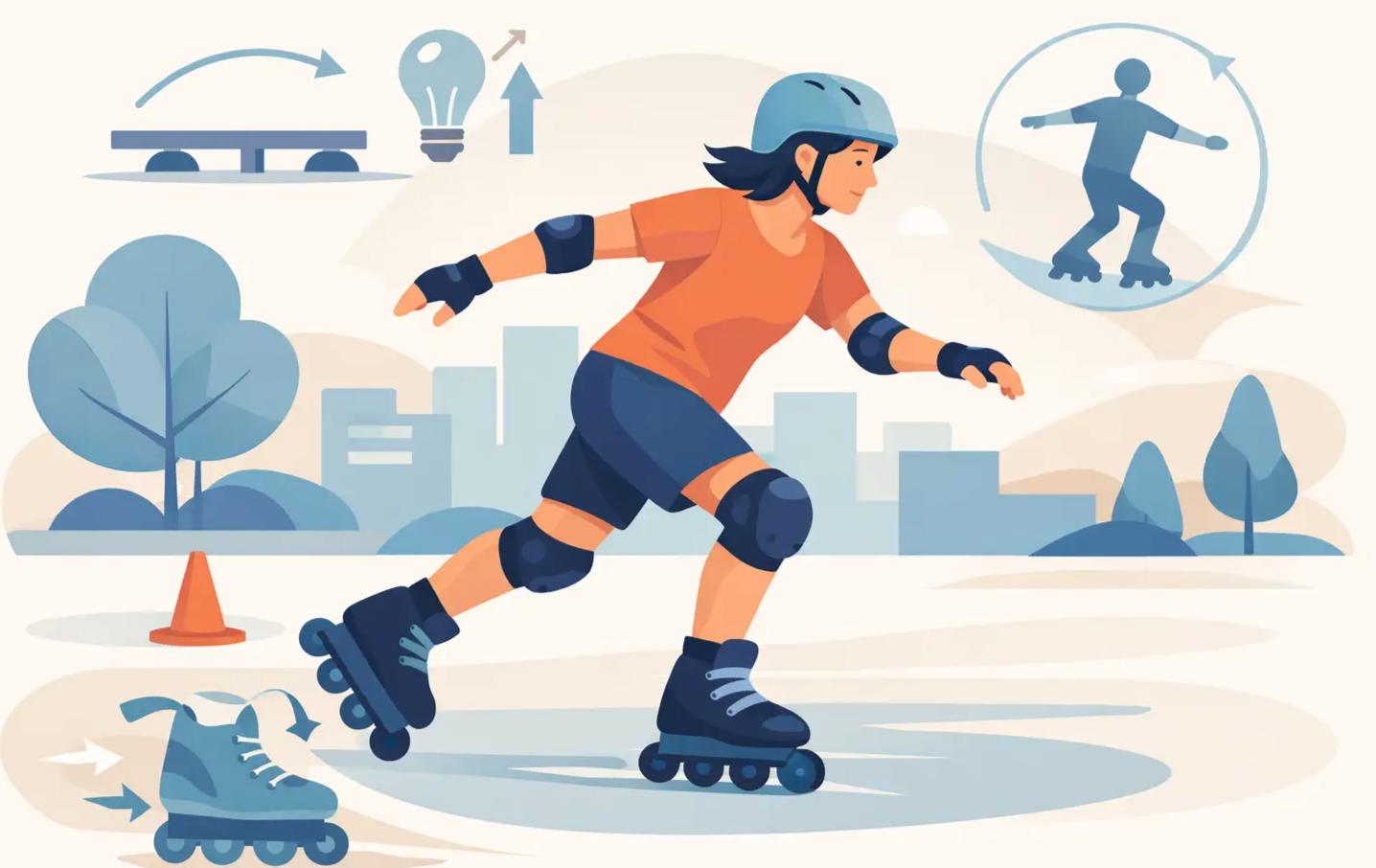
Your skates should feel snug, especially around the heel, without crushing your toes. If your foot slides around inside the boot, balance becomes much harder. Protective gear matters too. A helmet, wrist guards, knee pads, and elbow pads make practice less intimidating, and that usually means better practice. When you're less afraid of falling, you move more naturally.
Wheel choice matters more than many beginners realize. Softer wheels usually feel better for indoor learning because they offer grip and a smoother ride on many surfaces. Harder wheels can feel faster, but they may be less forgiving if you're still figuring out balance. If you're unsure, beginner-friendly class setups and coach recommendations can save you a lot of trial and error.
The posture that makes skating easier
Most beginner problems come back to posture. When people feel unstable, they stand tall and stiff. That reaction makes skating harder.
Instead, bend your knees, keep your chest lifted, and let your weight sit over the balls of your feet. Your arms can stay slightly out in front or to the sides for balance. Think athletic, not rigid. You want a low, ready position that helps you react.
Try this before you even roll. Stand on skates near a wall or sturdy support and practice holding that bent-knee stance. Shift your weight gently from side to side. Feel where your center is. If your knees lock or your hips drift too far back, you'll feel less in control.
A good rule is this: if you look relaxed, you're probably doing it right. If you look like you're bracing for impact, reset your stance.
Your first movements on skates
Before you try to glide, learn to march. Marching teaches you how to control your weight transfer, and that's the real engine of skating.
Start on a smooth, beginner-friendly surface. Step in place first. Then take tiny marching steps forward. Keep your knees bent and your feet under you rather than reaching too far ahead. Once that feels solid, let each step roll just a little longer. That is the beginning of your stride.
Many beginners push too wide or too hard. A small push is better. Roller skating should feel controlled before it feels fast. If your feet keep sliding apart, bring your focus back to short steps and strong posture.
At this stage, even a few clean rolls count as progress. You are teaching your body how to trust the movement.
Learn how to stop early
If you want to know how to learn roller skating with more confidence, learn a reliable stop as soon as possible. Nothing calms beginner nerves faster than knowing you can slow down on purpose.
The toe stop is often the first stop people learn, especially on quad skates, but it has to be taught carefully. Dragging the toe stop too aggressively behind you can pull you off balance. A safer beginner approach is to start with controlled slowdowns, then learn how and when to apply the toe stop with good body position.
Another useful beginner skill is the plow stop. In a plow stop, you widen your stance slightly and press outward through your heels while keeping your knees bent. It takes practice, but it gives you a stable way to reduce speed without panicking.
The best stop depends on your setup, your strength, and where you're skating. Indoors, one method may feel easier. Outdoors, surface texture changes things. That's why coached practice can help so much. Technique is easier to build when someone can correct small issues early.
Falling the right way still counts as learning
Nobody wants to fall, but trying too hard not to fall can make you tense and unstable. A better goal is to learn how to fall more safely.
If you feel yourself going down, bend more, not less. Staying low reduces impact. Try to avoid reaching straight back with your hands. Protective gear helps, but body awareness matters too. Knee pads and wrist guards are especially useful for beginners because they support safer reactions while you're still developing balance.
Practicing a controlled kneel or low squat off to the side can also help remove some of the fear. Once your body knows that losing balance is survivable, your movement usually gets smoother.
Practice in short, focused sessions
Long practice sessions are not always better. For most beginners, 20 to 40 minutes of focused work beats an hour of tired, frustrated skating.
Pick one or two skills per session. Maybe today is posture and marching. Next time, work on rolling and stopping. Small wins stack up quickly when your practice has a purpose.
It also helps to repeat drills instead of just skating around. A few passes of controlled marching, a few slow glides, and a few stop attempts will teach you more than mindless laps. If you feel fatigue setting in, stop. Tired legs lead to sloppy movement, and sloppy movement turns into habits.
Classes can speed up your progress
You can absolutely start on your own, but structured instruction usually shortens the learning curve. A good beginner class gives you a progression, feedback, and a space where being new is expected.
That matters more than people think. Many adults delay learning because they feel awkward. The truth is, most beginner skaters need the same corrections - bend your knees, keep your weight centered, take smaller pushes, look ahead. When a coach catches those things early, progress feels less random.
If you want support that feels clear and low-pressure, a studio like RollerFit can make the process much more approachable. Beginner classes, boot camps, and private lessons give you a step-by-step path instead of leaving you to guess what comes next.
Common mistakes that slow beginners down
A few habits show up again and again. Looking down at your feet is one of the biggest. Your body tends to follow your gaze, so staring down can throw off your posture. Try to look ahead instead.
Standing too upright is another common issue. Bent knees are not just a style tip. They are what allow you to balance, push, and recover smoothly. The same goes for trying to skate too fast too soon. Speed exposes weak fundamentals. Control builds them.
Then there's inconsistency. Practicing once every few weeks can make skating feel brand new every time. Even two short sessions a week can create much better momentum than one long session here and there.
What progress should actually feel like
Progress in roller skating is rarely dramatic. One day your stance feels less shaky. Then your push gets smoother. Then stopping feels a little less scary. Those changes can seem small, but they are exactly how real skill develops.
Some days will feel great. Other days you may feel clumsy for no obvious reason. That is part of learning a movement skill. Your body is still organizing new patterns, and not every session will feel polished. Keep going anyway.
The goal is not to look advanced right away. The goal is to build enough comfort that skating becomes fun. Once that happens, improvement tends to speed up because you're not just surviving the session anymore. You're actually moving with intention.
If you're just starting, give yourself permission to be a beginner for a minute. Strong basics, steady practice, and the right support will take you farther than rushing ever will.