Beginner Roller Skating Classes That Work
That first shaky lap is where most people decide one of two things: either roller skating is not for them, or they just need the right kind of help. The difference usually is not talent. It is structure.
Good beginner roller skating classes are built for that exact moment. They take the wobble, nerves, and information overload of day one and turn it into a clear path forward. If you are curious about skating for fitness, fun, confidence, or a fresh way to move your body, the right class makes learning feel possible from the start.
What beginner roller skating classes should actually teach
A true beginner class should not throw you into fancy footwork or expect you to figure things out by watching more experienced skaters. It should start with the basics that make everything else easier.
That means learning how to stand correctly on skates, how to find your balance without locking up, and how to shift your weight in a way that keeps you stable. It also means practicing how to roll with control, stop safely, and recover when you feel yourself getting off center. These are not small skills. They are the foundation for confidence.
The best classes also teach beginners how to fall more safely. That may sound intimidating, but it is one of the most useful parts of early instruction. When people know what to do if they lose balance, fear drops fast. Once fear drops, learning speeds up.
Why classes help beginners progress faster than skating alone
A lot of people try to teach themselves first. Sometimes that works, especially if they are naturally athletic or have a strong background in dance, hockey, or other balance-heavy sports. But for most beginners, solo practice creates two problems.
The first is inconsistency. If you are unsure what to practice, every session can feel random. You skate a little, get nervous, repeat the same mistakes, and go home without knowing if you improved.
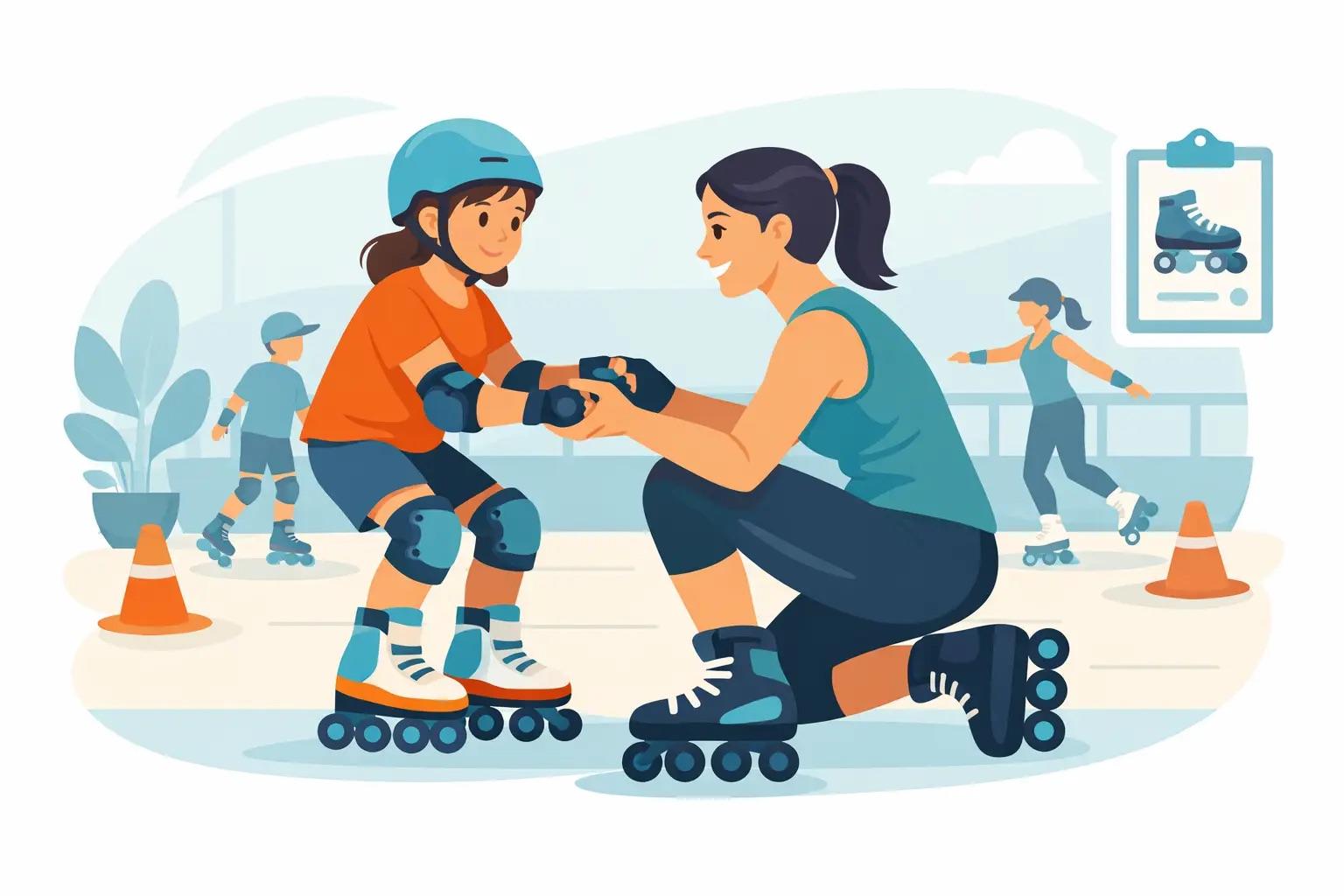
The second is form. Small posture issues can create big frustration. Looking down too much, keeping your feet too close together, or holding too much tension in your upper body can make skating feel harder than it needs to. In a class, an instructor can spot those things quickly and give you one adjustment that changes everything.
That is why structured beginner roller skating classes tend to feel more encouraging. You are not guessing your way through the basics. You are learning in steps, with coaching, repetition, and support.
What to look for in a beginner-friendly class
Not every skating class is truly beginner friendly, even if it is labeled that way. Some are better for people who already know how to roll and stop. Others move too quickly for nervous first-timers.
A strong beginner program usually has a few things in common. It starts at the ground level, gives students time to repeat skills, and creates a low-pressure environment where questions are welcome. It should feel organized, not chaotic.
Look for classes that clearly explain who they are for. If the description says no experience needed, that is a good sign. If the business offers a class picker quiz, intro offer, or beginner series, that often means they have put real thought into helping new skaters start in the right place.
It also helps when there is more than one way to keep learning. Some people do best in weekly group classes. Others want a short-term boot camp for momentum, private lessons for extra attention, or a membership that keeps them skating consistently. The best setup depends on your schedule, comfort level, and goals.
Your first class will probably feel awkward - that is normal
One of the biggest reasons adults delay signing up is the fear of looking silly. That fear is common, and it fades faster than most people expect.
Beginner classes are full of people who are in the same stage you are. Some have never worn skates. Some are coming back after twenty years. Some are fit but nervous. Some are not focused on fitness at all and just want to learn something fun. There is no single beginner profile.
What matters most is being in an environment where early mistakes are treated as part of the process, not proof that you cannot do it. A good coach knows how to break skills down, keep the room calm, and help students stack small wins. That first controlled glide, first stop, or first turn feels huge because it is huge. Confidence is built one repeat at a time.
Beginner roller skating classes for fitness and fun
Skating is one of the few workouts people look forward to. It challenges your balance, coordination, legs, and core, but it does not feel like staring at a treadmill clock. That is a big reason so many adults are drawn to classes.
Still, the fitness side of skating works best when the skill side is taught well. If you are tense and unsure on skates, you are not going to enjoy the movement enough to stick with it. Beginner roller skating classes help bridge that gap by making the physical side more accessible.
This is where a studio that understands both instruction and skate fitness can stand out. Instead of treating skating as just open play time, it becomes a guided activity that helps people improve while staying active. That mix is especially helpful for adults who want something social, energizing, and different from a standard gym routine.
Kids, teens, and adults need different kinds of support
The phrase beginner can mean a lot of different things. A six-year-old beginner and a forty-year-old beginner are not starting from the same place, even if both are brand new.
Kids usually need classes that keep things fun, simple, and movement-based. Teens often respond well to a balance of coaching and independence. Adults tend to want more explanation. They want to know what they are doing, why it works, and how long it may take to feel steady.
That is why age-appropriate programming matters. It is not just about keeping groups organized. It affects how comfortable students feel and how well they learn. Parents looking for classes should pay attention to whether the program has specific youth options rather than a one-size-fits-all approach.
How to know which class format is right for you
If you are choosing between group classes, a boot camp, and private lessons, the right answer depends on how you learn best.
Group classes are great for people who want structure, community, and a steady pace. They are often the easiest way to stay accountable because you have a time slot, an instructor, and classmates progressing alongside you.
A multi-week boot camp can be a smart option if you want faster momentum. Repetition over several weeks helps skills stick, and many beginners like having a clear start and finish point.
Private lessons can be the best fit if you feel extra nervous, want personalized feedback, or are trying to catch up quickly before joining a group. They are also useful for skaters who hit a plateau and need more targeted coaching.
If you are not sure where to start, that is exactly when a guided tool like the class picker at https://Roller.fit becomes useful. It takes some of the guesswork out of choosing and helps match beginners with the right entry point.
What beginners should bring besides skates
Gear matters, but mindset matters too. Wear comfortable clothes you can move in. Bring water. If protective gear is recommended, use it. Pads often help beginners relax enough to practice more freely, which is worth a lot.
More importantly, bring patience. Progress in skating is rarely a straight line. You might feel strong one day and wobbly the next. That does not mean you are going backward. It usually means your body is learning how to coordinate a new skill.
The skaters who improve most are not always the fastest learners on day one. They are the ones who keep showing up, stay coachable, and let repetition do its job.
The best class is the one that gets you rolling
There is no perfect moment to start. You do not need better balance first. You do not need to get in shape before taking a beginner class. You do not need childhood skating experience to belong in the room.
You just need a place that teaches the basics well, meets you at your level, and gives you room to build confidence without pressure. That is what beginner classes are for.
If roller skating has been sitting in the back of your mind for months, take that as a sign. Start where beginners start, let yourself be new, and give your future self the chance to feel steady on wheels.